


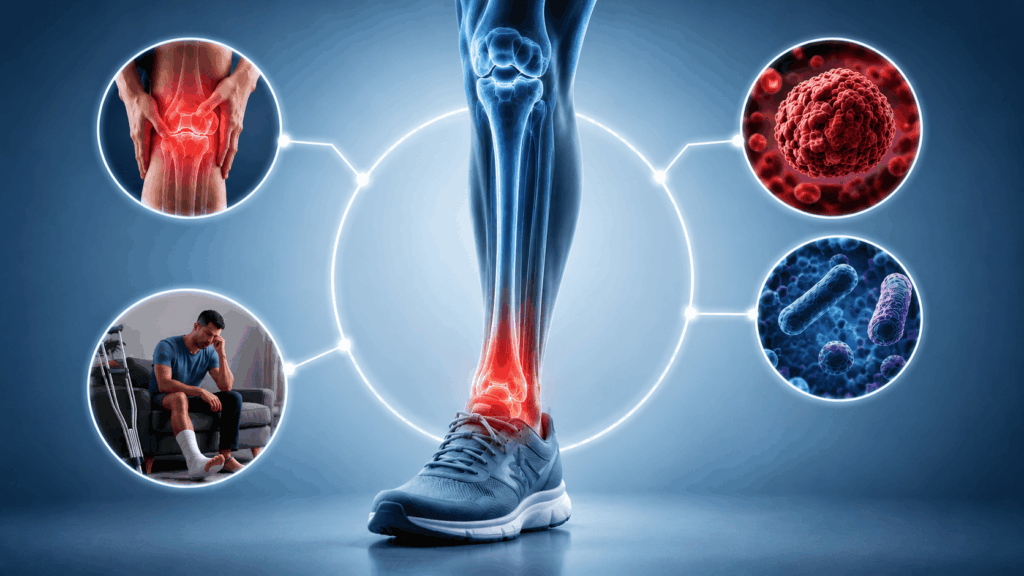
Limb lengthening surgery is a major orthopedic procedure chosen for both aesthetic purposes (height dissatisfaction) and medical reasons (limb length discrepancies, dwarfism, or bone loss due to trauma). Just like any other major surgical process, this procedure naturally carries certain risks and potential complications within its scope.
For almost everyone considering this surgery, critical questions inevitably come to mind: “Is limb lengthening surgery dangerous?“, “What is the worst-case scenario I might encounter?“, “Could I become disabled after the surgery?“ In this professional guide, we answer all of these vital questions in a clear, transparent, and evidence-based medical manner. Backed by our certified international health tourism authority and the smiles of hundreds of patients who have undergone successful operations, we ensure you take every step through this journey with absolute confidence.
1. Risks and Professional Solutions in Limb Lengthening Surgery
As a major surgical procedure, limb lengthening surgery can bring along various biological risks. However, modern orthopedic approaches, accurate treatment protocols, and early diagnosis allow the vast majority of these risks to be managed successfully without causing permanent damage.
A. Infection Risk and Management
Infections can stem from a lack of strict sterilization during the surgical process or the patient’s non-compliance with hygiene rules during the postoperative recovery phase.
- Symptoms: High fever, severe redness around the surgical site, unusual swelling, foul-smelling discharge, and throbbing pain.
- Professional Solutions and Treatment:
- Antibiotic Treatment: Superficial infections diagnosed early are quickly brought under control with targeted antibiotic therapy.
- Regular Dressing and Cleaning: Consistently cleaning the surgical area and pin insertion sites effectively prevents the infection from spreading to deeper tissues.
- Advanced Surgical Intervention: In very severe cases where deep tissues are affected, a surgical debridement (cleaning of the infected tissue) in an operating room environment may be required. In such a scenario, the patient is hospitalized for a short period to receive intravenous (IV) antibiotics.
- Our Clinical Note: Among our patients who follow our strict postoperative guidelines and remain under our care, no serious or deep tissue infection cases have occurred to date. All potential early signs of infection have been successfully prevented through our proactive, prophylactic antibiotic protocols.
In fully internal motorized nail methods, there is no external device present. Consequently, the need for medical dressings is significantly reduced, and the risk of infection is minimized.
B. Bone Nonunion or Slow Bone Healing (Bone Nonunion)
During the bone distraction (lengthening) phase, the body is expected to form new bone tissue (callus) between the two cut ends of the bone. Advanced age, inadequate or unbalanced nutrition, smoking, poor blood circulation around the surgical site, or insufficient physical activity can delay this bone healing process.
- Symptoms: X-ray evaluations failing to show new bone tissue formation or showing a healing process that is far too slow compared to the lengthening rate.
- Professional Solutions and Treatment:
- Dietary Support: A specialized nutrition plan rich in Calcium, Magnesium, Zinc, and Vitamin D is strictly implemented.
- PRP and Stem Cell Therapy: Once the lengthening phase is complete, PRP (Platelet-Rich Plasma) or stem cell injections can be applied to the slow-healing area under local or general anesthesia to boost bone quality. This method exerts a highly powerful and positive stimulus on bone consolidation.
- Bone Grafting: In exceptionally rare cases where bone healing stops entirely, bone tissues harvested from another part of the body or synthetic bone grafts are transplanted to trigger biological recovery.
- Our Clinical Note: The need for surgical bone grafting is practically nonexistent among our patients. The very rare instances of slow bone healing are successfully resolved non-surgically at our clinic using target-oriented PRP or stem cell applications.
C. Nerve and Blood Vessel Damage
This condition may occur due to direct mechanical trauma during surgery or when surrounding soft tissues (nerves and blood vessels) are stretched excessively because they struggle to adapt to the pace of bone lengthening during the distraction phase.
- Symptoms: Numbness in the legs or toes, electric shock sensations, tingling, loss of sensation, coldness, or muscle weakness (such as foot drop).
- Professional Solutions and Treatment:
- Physiotherapy: Neurological rehabilitation exercises are utilized to stimulate nerve regeneration and optimize blood circulation.
- Medical Therapy: Anti-inflammatory medications and Vitamin B complex supplements are prescribed to support nerve recovery. The daily lengthening rate (standardly 1 mm per day) is immediately reduced, or lengthening is paused entirely until the nerve relaxes.
- Microsurgical Repair: Depending on the severity of the damage, microscopic nerve or vessel repair may rarely be required.
- Our Clinical Note: Thanks to the meticulous surgical precision and millimetric planning demonstrated by Assoc. Prof. Dr. Yunus Öç, no cases of permanent nerve or vessel damage have ever been observed in our patients.
D. Psychological Stress and Loss of Motivation
The limb lengthening journey involves months of restricted mobility, temporary isolation from social life, and physically exhausting daily routines, which can place a significant mental burden on patients.
- Symptoms: Anxiety, mild depressive symptoms, sleep disturbances, and a loss of motivation regarding the recovery process.
- Professional Solutions and Treatment:
- Psychotherapy Support: Professional guidance from expert psychologists is provided to help patients manage anxiety and stress throughout the process.
- Support Groups: Communicating with other patients who are going through the exact same stages or who have successfully completed their treatment significantly boosts morale.
- Our Clinical Note: We care deeply about our patients’ mental well-being alongside their physical health. By offering online psychotherapy sessions, social motivation activities, and monthly moral tours, we ensure our patients complete this challenging marathon with high spirits.
2. Complications and Solutions
Complications are mechanical or functional issues that can be encountered during the long postoperative recovery and distraction phases. They can all be successfully resolved with early diagnosis and correct protocols.
A. Muscle and Tendon Shortening (Soft Tissue Resistance)
As the bone is artificially lengthened, it takes time for the muscles at the front and back of the leg (hamstrings, quadriceps, gastrocnemius) and tendons (especially the Achilles tendon) to adapt. When these tissues cannot stretch at the same pace, tightness occurs. This is particularly noticeable in lower leg (tibia) lengthening procedures.
- Symptoms: Restricted joint range of motion, difficulty straightening the legs fully while walking, and the inability to touch the heel to the ground (Equinus complication, commonly known as Ballerina Foot).
- Solutions:
- Intensive Physiotherapy: Daily aggressive stretching and strengthening exercises guided by an expert physiotherapist ensure the muscles elongate properly.
- Massage and Manual Therapy: Applied regularly to relax muscle tissues and release trigger points.
- PRP Treatment: Can be used to accelerate the recovery of micro-tears in muscles and tendons, enhancing their overall elasticity.
- Pre-operative Preparation: We send our patients personalized pre-surgery exercise programs weeks in advance to strengthen and prep their muscles for the procedure.
B. Device and Mechanical Issues
In implants used during the LON (Combined) method or fully internal motorized techniques such as Fitbone and Precice, mechanical malfunctions, loosening of locking mechanisms, or implant bending due to premature weight-bearing may very rarely occur. Such complications can extend the overall recovery timeline.
- Symptoms: Sudden, unusual pain in the leg, acute tenderness where the device is anchored, mechanical clicking sounds outside of the standard lengthening clicks, or a halt in the lengthening process.
- Solutions:
- Regular Device Checkups: Periodic physical evaluations performed by our expert medical team continuously assess the functionality and positioning of the device.
- Radiological Imaging: X-rays taken at regular intervals allow us to track the precise alignment and weight-bearing capacity of the internal nail within the bone. If necessary, the device can be surgically adjusted or repaired.
C. Range of Motion Restrictions in Knees and Hips
Subjecting joints to excessive tension while the bone is lengthening can cause joint stiffness. The knee and hip joints are the areas most affected during this process, especially during thigh (femur) lengthening.
- Symptoms: A reduction in the bending or straightening angle of the knees or hips, localized pain, and a constant feeling of stiffness.
- Solutions:
- Joint-Specific Exercises: Specialized exercise programs and the use of dedicated devices (such as Continuous Passive Motion – CPM) are utilized under expert supervision to safely increase flexion and extension angles.
- Hot and Cold Therapy: Applied alternately to reduce edema around the joint and improve tissue pliability.
- Anti-inflammatory Medications: Reclaimed under doctor supervision to alleviate joint inflammation and associated pain.
- Device Replacement or Repair: The replacement or repair of the device is ensured when necessary.
D. Blood Coagulation (Deep Vein Thrombosis – DVT)
Remaining immobile for long stretches during the early postoperative phase slows down blood flow in the deep veins of the leg, raising the risk of clot formation. If a clot breaks loose and travels to the lungs (pulmonary embolism), it can become life-threatening.
- Symptoms: One-sided severe pain specifically in the calf, sudden leg swelling, acute tenderness to the touch, skin redness, and increased warmth.
- Solutions:
- Blood Thinners: To eliminate the possibility of coagulation, low-molecular-weight heparin or oral anticoagulants are standardly prescribed immediately following surgery.
- Compression Socks: These socks apply external pressure to the limbs, facilitating faster return of deoxygenated blood back to the heart.
- Early Mobilization: Prolonged bed rest is strictly avoided. Patients are encouraged to perform light walks and bed-bound leg exercises starting from the very next day after surgery. If a risk factor is suspected, color Doppler ultrasound is used for swift diagnosis and treatment optimization.
- Early Detection: Blood clot formation is detected at an early stage using ultrasound and other diagnostic methods, allowing for timely intervention.
3. “Is There a Risk of Becoming Disabled After Limb Lengthening Surgery?”
The greatest fear among individuals researching limb lengthening surgery is permanently losing the ability to walk or becoming disabled. It is vital to understand that limb lengthening surgery is a highly controlled, step-by-step orthopedic procedure that leaves no room for coincidence. When performed by an expert surgeon backed by an experienced medical team, the risk of permanent disability is extremely low.
Why is the Risk of Disability So Low?
Experienced Surgeon & Team
Assoc. Prof. Dr. Yunus Öç and his team approach the preservation of nerves, blood vessels, and muscle tissues with extreme surgical precision based on years of experience.
Advanced Technological Methods
By utilizing modern fiksation systems with globally proven reliability, such as LON, Precice 2, and Fitbone, complication rates are minimized.
Tailored Physiotherapy Protocols
The rehabilitation process is entirely customized to the patient’s individual muscle response, ensuring tissues adapt without permanent contractures.
Strict Radiological Follow-ups
Millimetric X-ray evaluations performed weekly or bi-weekly allow even the smallest anomaly to be caught early and corrected immediately.
The hundreds of successful surgeries we have completed, along with our patients’ full return to their daily routines and active sports lives, stand as the concrete proof that this process is highly safe when managed correctly.
Frequently Asked Questions
1. Will I experience permanent problems due to infection or nerve damage after limb lengthening surgery?
No. Through meticulous surgical techniques and rigid follow-up protocols, these risks are kept under absolute control. Thanks to the rigorous sterilization practices at our hospital and our professional post-op dressing checkups, none of our patients have ever experienced a deep or serious tissue infection. Similarly, due to the precise planning of Assoc. Prof. Dr. Yunus Öç and real-time monitoring of nerve stretching throughout the distraction phase, no cases of permanent nerve or blood vessel damage have occurred in our clinic.
2. If my bone healing is slow, will I need another major surgery or bone grafting?
If bone healing slows down during the lengthening phase, the need for another major surgical operation or a bone graft (bone powder transplant) is virtually nonexistent in our practice. When slow bone healing is detected via routine X-rays, we resolve the issue non-surgically. By performing targeted PRP or stem cell injections under local or general anesthesia, we trigger the body’s natural biological bone production mechanisms and successfully accelerate the bone consolidation process.
3. Can muscle and tendon shortening cause permanent joint stiffness or restrictions?
No. Muscle and tendon tightness (such as the inability to bend the knee fully or the heel lifting off the ground) are entirely temporary conditions. Our aggressive treatment approaches prevent them from turning into permanent limitations. To counteract this soft tissue resistance, we supply our patients with muscle-strengthening exercise programs prior to surgery. Starting the very next day after the operation, our expert physiotherapists launch daily intensive stretching, mobility exercises, and manual therapy sessions to fully preserve the joint’s range of motion.
4. How long after the surgery can I walk normally and return to sports activities?
Controlled light walking (mobilization) is started the day after surgery to maintain healthy blood circulation and eliminate the risk of blood clots (DVT). However, returning to strenuous physical activities and sports depends entirely on the bone regaining its full weight-bearing capacity. Generally, during the first 5–6 months post-surgery, high-impact or contact sports are avoided until bone consolidation is fully confirmed via X-rays. Following our doctor’s approval, you can safely transition back to all sports activities, starting with light, low-impact exercises under expert guidance.
Summary and Conclusion: Full Recovery is Achievable with Proper Management
Limb lengthening surgery stands as one of modern medicine’s most profound achievements in the field of orthopedics. While the journey presents specific challenges, temporary side effects, and risks that require strict management, these factors should not discourage you. Combining a highly experienced surgical team, premium hospital sterilization standards, continuous clinical monitoring, and a disciplined physical therapy program reduces risks to near-zero levels, leading to a successful and complete recovery.
Together with Assoc. Prof. Dr. Yunus Öç and our specialized medical team, we guide you through every single millimeter of your journey—from the day you decide on treatment to the joyous moment your devices are removed and you take your first free steps. We balance your aesthetic goals with your health and safety at the highest level of professional excellence.
To receive comprehensive information about limb lengthening methods, current pricing, and your personalized treatment timeline, feel free to contact us at any time to set up a free pre-evaluation consultation. We look forward to answering all your questions.