
Technical Features and Functions of the Nail
Magnetic control mechanism: One of the key features of the Precice 2 system is its ability to perform gradual lengthening through a remote controller with a magnetic mechanism. This allows patients to manage the lengthening process comfortably in their daily lives.
Precise and adjustable lengthening: The daily lengthening rate can be customized based on the patient’s pain level and bone healing progress. This flexibility also helps surrounding muscles and nerves adapt more safely to the lengthening process.
High durability and biocompatibility: Made from titanium, the nail is designed to be strong, long-lasting, and fully compatible with the human body. This reduces the risk of allergic reactions and allows the implant to remain safely inside the body for an extended period.
Features
Equipments Used in the Precice Method
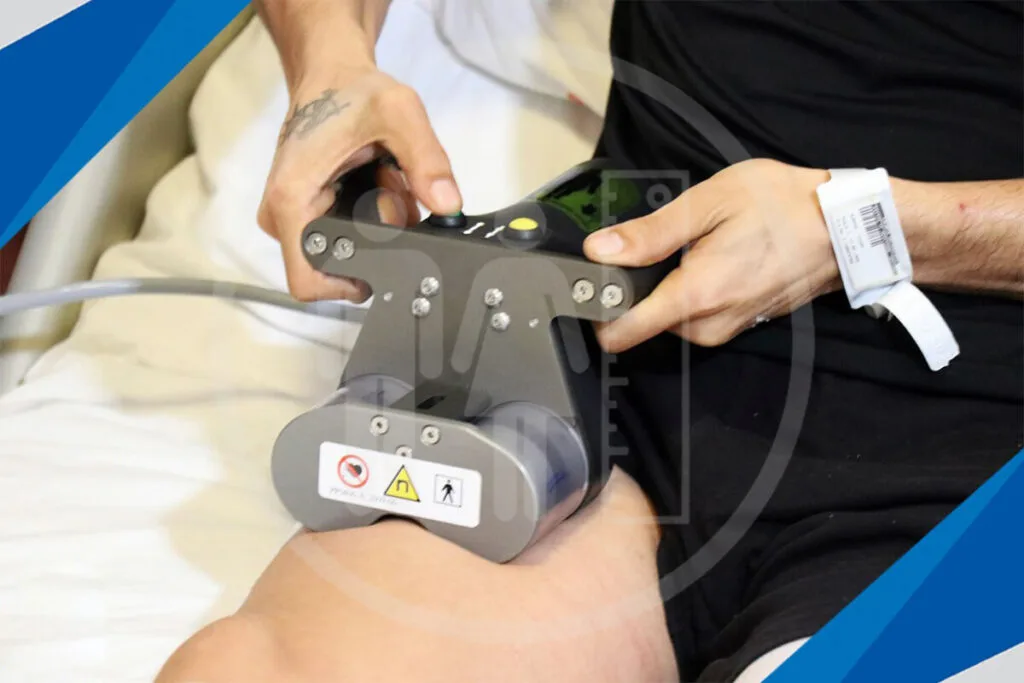
External Remote Controller (ERC)
It is used to gradually lengthen the nail placed inside the bone in a safe and controlled manner. The function of the remote controller is to manage the internal nail with high precision, ensuring that the lengthening process progresses smoothly without causing unnecessary stress to the bone or surrounding tissues.
Thanks to its magnetic mechanism, the device activates the internal system of the nail and allows a daily lengthening of approximately 0.99 mm. This slow and controlled distraction enables the body to naturally form new bone tissue in the gap, supporting healthy and stable bone regeneration throughout the process.
The use of the External Remote Controller (ERC) eliminates the need for any additional surgical intervention during the lengthening phase. It is designed to be simple and user-friendly, allowing patients to perform the adjustments comfortably at home or as part of their daily routine. This provides greater independence, flexibility, and convenience during the treatment.
In addition, the ERC allows doctors to adjust the lengthening schedule when necessary, depending on the patient’s pain level, bone healing speed, and overall progress. This level of control helps optimize the treatment outcome while maintaining patient safety and comfort at every stage of the process.
Intramedullary Nail
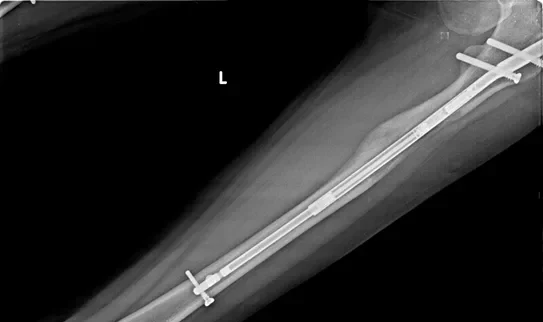
It is a technologically advanced internal fixation system used in limb lengthening surgeries, designed to provide stability and support throughout the entire process. Made from high-quality titanium, the nail offers exceptional strength while remaining fully biocompatible with body tissues, meaning it can safely remain inside the body for an extended period without causing adverse reactions.
The size of the nail is carefully selected according to the patient’s bone structure and anatomy, typically ranging between 8.5 mm, 10.7 mm, 11.5 mm, or 12.5 mm. During this planning stage, the surgeon evaluates detailed X-ray images to determine the most suitable option based on bone thickness, length, and overall structure, ensuring optimal performance and safety.
During the operation, the intramedullary nail is precisely inserted into the inner canal of the bone. This placement allows the bone to maintain its strength while enabling a controlled and stable lengthening process. The nail acts as an internal support system, guiding the bone as it gradually extends and ensuring proper alignment throughout the treatment.
Thanks to its lightweight yet durable titanium composition, the nail enhances patient comfort and allows for a more natural movement experience during recovery. It also helps reduce the risk of complications by minimizing external interference, providing a safer, more controlled, and more comfortable lengthening process inside the bone.
In the video below, you can follow the post-operative journey of our Russian patient who underwent limb lengthening surgery using the Precice method.
The Precice system is equipped with a remote controller that enables precise and controlled adjustments of the internal nail. In this case, when an over-lengthening was identified in one leg, the system was used in reverse mode, allowing the nail to retract and correct the discrepancy effectively.
One of the key advantages of the Precice system is its ability to respond quickly to such situations. By simply reversing the controller, the nail moves in the opposite direction, making it possible to safely and gradually reduce the length when needed, ensuring a more accurate and controlled outcome.
Important Information
Patients weighing approximately 40–70 kg may be able to walk with the support of a walker, depending on the nail size and under strict medical supervision. However, it is extremely important to avoid placing excessive weight on the nail during this period. Walking is only permitted in a controlled and limited manner, such as during physiotherapy sessions, short walking exercises, or essential daily needs like going to the toilet.
Outside of these limited activities, the use of a wheelchair is necessary throughout the lengthening phase. This precaution is essential to protect the nail’s weight capacity and ensure the safety of the treatment process. Applying too much pressure on the legs may damage the nail mechanism or negatively affect the quality of the newly forming bone, which could increase the risk of complications and delay recovery.
Two Surgeries with Precice 2
If the Precice method is selected, the treatment process involves two separate surgical procedures.
- Limb lengthening surgery / preparation: First, a detailed evaluation is performed, including general health assessment and necessary X-ray imaging. Based on these findings, the most suitable nail size is selected according to the patient’s bone structure and targeted lengthening.
- Surgical placement: Under general anesthesia, a controlled osteotomy is performed to create the space required for lengthening. After this, the previously selected Precice 2 nail is inserted into the bone and securely fixed in place.
- Controlling the nail with the remote controller: After surgery, the recovery and lengthening phase begins. Patients gradually lengthen the bone by using the External Remote Controller (ERC). This process is typically performed three times a day, achieving approximately 0.99 mm daily (0.33 mm x 3), allowing a slow and controlled extension.
- Recovery and follow-up process: Throughout the treatment, wound care and medication are closely monitored. Regular X-rays are taken to evaluate bone healing and consolidation. Consistent physiotherapy is essential to help muscles and joints adapt to the lengthening process, enabling patients to safely return to daily and social activities.
- Intramedullary nail removal surgery: Once full bone healing is achieved, the nail can be removed depending on the doctor’s recommendation and the patient’s preference. This procedure usually takes around 2–2.5 hours. After surgery, patients use assisted walking for approximately two weeks, after which they can gradually return to normal daily life.
What are the advantages of the Precice 2 Method?
Minimal invasive system
Since no external fixators are used, the risk of infection and skin irritation is minimal. The nail is placed entirely inside the bone, which means there are no visible external scars and patients can experience a more comfortable and discreet recovery process.
Comfortable and less risky recovery process
Because the Precice 2 nail is internally placed, it generally causes less discomfort and supports a smoother recovery. Muscles, nerves, and connective tissues can adapt more easily thanks to the gradual and controlled lengthening.
Dual usage
Precice 2 can be safely used for both femur (upper leg) and tibia (lower leg) lengthening, offering flexibility for different patient needs and goals.
High security
Made from biocompatible titanium, the Precice 2 nail can remain inside the bone for a long time without causing adverse reactions. Its advanced internal design also ensures durability and long-term resistance.
Adaptable with daily life
During the lengthening phase, patients can move with the help of a wheelchair or walker. In suitable cases, short-distance walking is also possible, helping patients maintain a degree of independence.
Low infection risk
Since there are no external fixators, patients can maintain better hygiene, including regular showering, which further reduces infection and complication risks.
Precise and adjustable control
The magnetic remote system allows highly accurate daily lengthening adjustments, which can be modified based on the patient’s comfort, pain level, and healing progress. This ensures a safer and more personalized treatment process.
Better aesthetic outcome
With no external hardware and minimal incisions, the method results in less visible scarring, providing a more natural and aesthetically pleasing appearance after recovery.
What are the disadvantages of the Precice 2 Method?
High cost
The Precice 2 method is more expensive than other lengthening techniques due to its advanced technology and higher level of comfort. This may create financial challenges for some patients.
Limited weight-bearing capacity
The nail can only bear a limited amount of weight, so patients must restrict their activities and avoid putting excessive pressure on the legs. For this reason, the use of a wheelchair or walker is necessary during the lengthening phase.
Requirement of a second surgery
After the lengthening and full recovery are completed, a second procedure is required to remove the nail. Although this operation is relatively short, it still involves a recovery period.
Limited lengthening capacity
The system typically allows up to around 7–8 cm of lengthening in a single procedure. Patients who wish to gain more height may require an additional surgery, which extends both the treatment duration and overall cost.
Risks and complications
Despite being minimally invasive, there are still potential risks such as delayed bone healing, nonunion, infection, or pain. Rare issues like nail bending or slower-than-expected bone formation may also occur.
Device malfunction
Although the Precice 2 system uses advanced magnetic technology, there is a small risk of mechanical or functional issues. In such cases, additional medical intervention may be required, potentially prolonging the recovery process.
Psychological effects
The long treatment duration and limited mobility may affect the patient’s mental well-being. Some individuals may experience stress, reduced motivation, or emotional challenges during recovery.
Requirement of expertise
The Precice 2 method requires a high level of surgical experience and technical knowledge. Not all orthopedic surgeons are qualified to perform this procedure, and choosing an experienced specialist is essential to minimize complication risks.
Why Patients Prefer the Precice 2 Method
- Comfortable recovery process: Since there are no external fixators, Precice 2 offers a significantly more comfortable experience. The fully internal system eliminates external discomfort and visible marks, allowing patients to adapt to their daily routines more easily during recovery.
- Minimal risk of infection: As a completely internal fixation system, Precice 2 greatly reduces the risk of infection compared to external methods. This makes it an ideal option for patients who prioritize safety and hygiene throughout the treatment process.
- Aesthetic advantages: The nail is placed entirely inside the bone, with no visible external devices. This provides a clear aesthetic benefit, especially for patients who prefer minimal or no visible scars after the procedure.
- Lower psychological stress: Unlike external fixator methods, which may cause aesthetic and physical discomfort during a long recovery period, Precice 2 offers a more discreet experience. This helps patients feel more confident, comfortable, and mentally at ease throughout the treatment journey.
FAQ
What is the Precice 2 method and how does it work?
The Precice 2 method is a fully internal limb-lengthening system that uses a magnetically controlled intramedullary nail placed inside the bone. Unlike traditional methods that rely on external fixators, this system operates entirely from within the body, providing a more comfortable, aesthetic, and patient-friendly experience.
During the surgery, the bone is carefully divided in a controlled manner, and the Precice 2 nail is inserted into the inner canal of the bone. After the operation, the lengthening process begins gradually. Patients use a specialized External Remote Controller (ERC) to activate the magnetic mechanism inside the nail, allowing the bone to lengthen in small, precise increments.
The lengthening is typically performed at a rate of approximately 1 mm per day, often divided into multiple sessions throughout the day. This slow and controlled process allows new bone tissue to form naturally in the gap, while muscles, nerves, and surrounding tissues adapt safely over time.
One of the most advanced features of the Precice 2 system is its ability to be adjusted or even reversed if necessary. If an over-lengthening or imbalance occurs, the system can be corrected using the same remote controller without requiring additional invasive procedures.
Because the entire system is internal, there are no external scars or pin sites, which significantly reduces the risk of infection and improves overall patient comfort. This makes Precice 2 one of the most advanced and preferred technologies in modern limb-lengthening surgery.
How many centimeters can I gain with the Precice 2 method?
With the Precice 2 method, patients can typically achieve around 5–7 cm of lengthening in the tibia (lower leg) and up to approximately 8–8.5 cm in the femur (upper leg). These ranges are considered safe and optimal to allow proper adaptation of muscles, nerves, and joints during the lengthening process.
It is important to understand that the achievable height increase is not determined by the method alone. Individual factors such as bone structure, flexibility, age, weight, and healing capacity play a critical role in determining how much lengthening can be safely achieved.
Precice 2 is designed to provide precise and controlled lengthening rather than maximum length at all costs. The system allows gradual adjustments, which helps the body adapt more naturally and reduces the risk of complications. Because of its controlled mechanism, it is especially suitable for patients who prioritize safety, precision, and comfort.
For patients who aim to gain more height beyond these limits, a staged approach may be considered. This involves performing a second surgery on another bone segment (for example, femur followed by tibia) after full recovery from the first procedure. However, these surgeries are always performed separately to ensure patient safety.
Ultimately, the goal is not to reach the highest possible number, but to achieve the best and safest result tailored to the patient’s body and expectations.
What is the recovery process like with the Precice 2 method?
The recovery process with the Precice 2 method is structured, gradual, and closely monitored to ensure both safety and optimal results. It consists of several phases: the initial post-operative period, the lengthening phase, and the consolidation phase where the new bone hardens.
After surgery, patients typically begin physiotherapy within a few days to maintain joint mobility and prevent stiffness. Unlike external fixator methods, Precice 2 requires more controlled movement due to its limited weight-bearing capacity. Patients are usually advised to use a wheelchair for daily activities, while short and controlled walking with assistance may be allowed under medical supervision.
The lengthening phase starts shortly after surgery and progresses at an average rate of about 1 mm per day using the External Remote Controller (ERC). This phase usually lasts around 2–3 months, depending on the planned lengthening amount. During this period, regular X-rays are taken to monitor bone formation and ensure the process is progressing safely.
Following the lengthening phase, the consolidation phase begins. This is when the newly formed bone gradually hardens and strengthens. Patients slowly increase their activity level during this stage, and mobility improves over time. Most patients begin walking without support around 5–6 months, depending on healing progress.
Full recovery, including complete bone consolidation, typically takes around 9–12 months. Consistent physiotherapy, proper nutrition, and regular follow-ups are essential to ensure a smooth and successful recovery.
What are the advantages of the Precice 2 method?
The Precice 2 method offers several significant advantages, making it one of the most preferred limb-lengthening techniques today. Its fully internal design, combined with advanced magnetic technology, provides a high level of comfort, precision, and safety throughout the entire treatment process.
One of the biggest advantages is that the system is completely internal. Since there are no external fixators, patients do not experience pin-site infections, skin irritation, or visible external scars. This greatly improves both the aesthetic outcome and the overall daily comfort during recovery.
Another key benefit is the precision and control it offers. The magnetic remote system allows the lengthening process to be adjusted according to the patient’s pain level and bone healing progress. This flexibility ensures that the treatment remains safe and personalized at every stage.
Precice 2 also provides a more comfortable recovery experience compared to external methods. Since the lengthening is gradual and controlled, muscles, nerves, and surrounding tissues can adapt more naturally, reducing the risk of severe discomfort and complications.
In addition, the system allows for corrective adjustments if needed. In cases of over-lengthening or imbalance, the nail can be reversed using the remote controller, eliminating the need for additional invasive procedures.
Overall, the Precice 2 method stands out for its combination of comfort, advanced technology, minimal scarring, and precise control, making it an ideal option for patients who prioritize both safety and quality of life during treatment.
What are the risks and disadvantages of the Precice 2 method?
Although the Precice 2 method is considered one of the most advanced and comfortable limb-lengthening techniques, it still has certain risks and limitations that should be carefully considered before treatment.
One of the main disadvantages is its limited weight-bearing capacity. Patients are required to restrict walking during the lengthening phase and rely mostly on a wheelchair or assisted movement. Excessive weight on the legs may damage the nail or negatively affect bone formation, which can slow down recovery.
Another important factor is the cost. Due to its advanced magnetic technology and fully internal system, Precice 2 is more expensive compared to other methods. This may make it less accessible for some patients.
There is also a requirement for a second procedure to remove the nail after full recovery, depending on the doctor’s recommendation. Although this is a relatively minor surgery, it still requires additional recovery time.
From a medical perspective, potential risks include delayed bone healing, nonunion, nerve sensitivity, and muscle stiffness. These are not unique to Precice 2 but can occur in any limb-lengthening procedure. In rare cases, mechanical issues such as nail malfunction or slower-than-expected lengthening may occur, requiring medical intervention.
Additionally, the long treatment period and limited mobility during the process may have psychological effects on some patients, such as reduced motivation or emotional stress.
Overall, while the risks are generally low and manageable, choosing an experienced surgical team and following all medical instructions are essential to minimize complications and ensure a successful outcome.
Who is a suitable candidate for the Precice 2 method?
The Precice 2 method is suitable for patients who are looking for a comfortable, minimally invasive, and fully internal limb-lengthening solution. It is often preferred by individuals who prioritize aesthetics, lower infection risk, and a more discreet recovery process.
Ideal candidates are generally adults with good overall health, sufficient bone quality, and realistic expectations about the procedure. Patients should not have severe bone deformities, active infections, or medical conditions that may negatively affect bone healing. In addition, body weight is an important factor, as the system has limited weight-bearing capacity and may not be suitable for heavier individuals without proper evaluation.
The method is particularly suitable for patients who can commit to a structured recovery process. Since mobility is more limited during the lengthening phase, patients must be willing to use assistive devices such as a wheelchair and follow a strict physiotherapy program.
Psychological readiness is also an important aspect. The treatment requires patience, discipline, and long-term commitment. Patients who are mentally prepared for a gradual process and can follow medical instructions closely tend to achieve the best outcomes.
Ultimately, candidacy for the Precice 2 method is determined after a detailed medical evaluation. The surgeon assesses bone structure, general health, and patient expectations to decide whether this method is the safest and most appropriate option.