


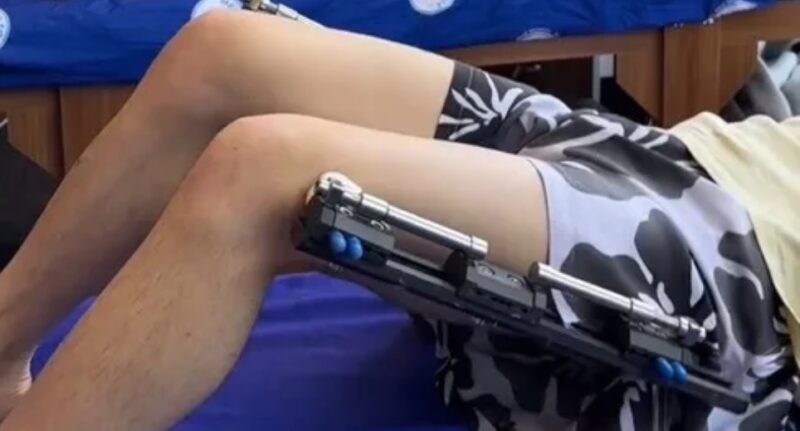
The LON technique, also known as the combined method, is an advanced approach designed to maximize patient comfort while accelerating the recovery process. By reducing the duration that external fixators remain on the leg, this method allows patients to heal more efficiently and return to daily life sooner. The procedure combines internal nails placed inside the bone with external fixators applied outside, ensuring a controlled and secure lengthening process.
Compared to traditional techniques such as the Ilizarov or Holyfix methods, the external fixators in the LON method are typically used for only 2 to 3 months. This shorter usage period helps lower the risk of infection and enables patients to regain mobility more quickly.
Its practical application and cost-effectiveness make LON a preferred option for many patients. In addition to removing external devices sooner, patients can adapt to their normal routines faster and experience a more manageable recovery journey.
Features
Components of the LON method
External Fixators
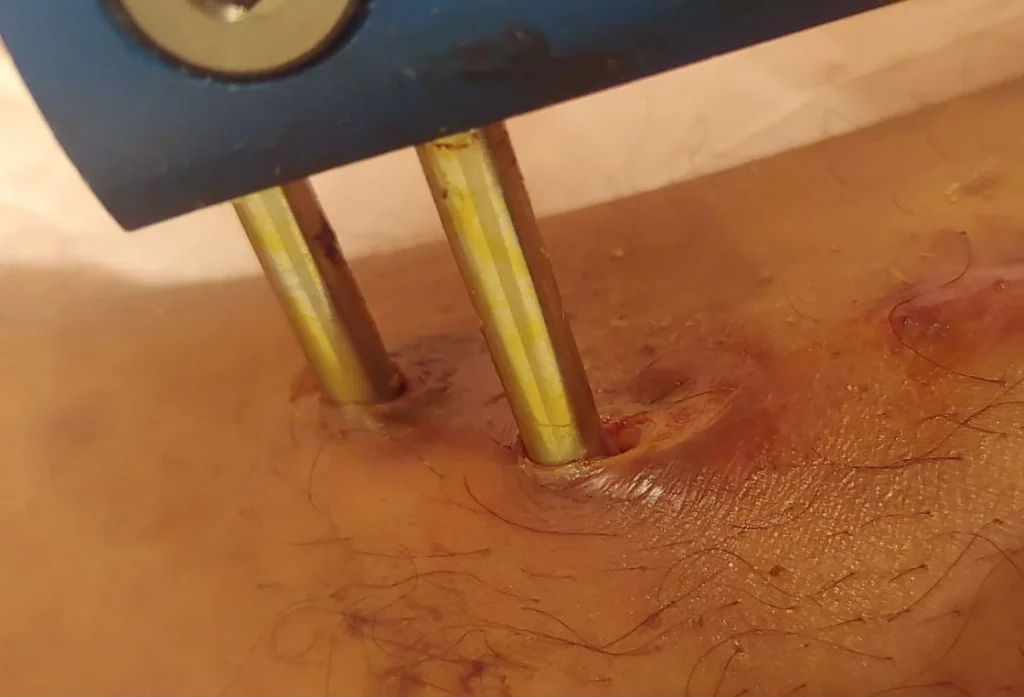
An external fixator is a robust support system used in limb lengthening procedures to stabilize the bone from the outside. It plays a critical role in ensuring proper bone healing by keeping the bone steady throughout the lengthening phase. The device, made of strong metal rods, is securely attached to the bone with specialized pins, allowing the lengthening process to proceed in a safe and controlled manner.
It is applied during surgery and typically remains on the leg for about 2 to 3 months, depending on the planned lengthening. During this period, the external fixator maintains bone alignment, preserves stability, and supports healthy bone regeneration as the lengthening continues.
Intramedullar Nail
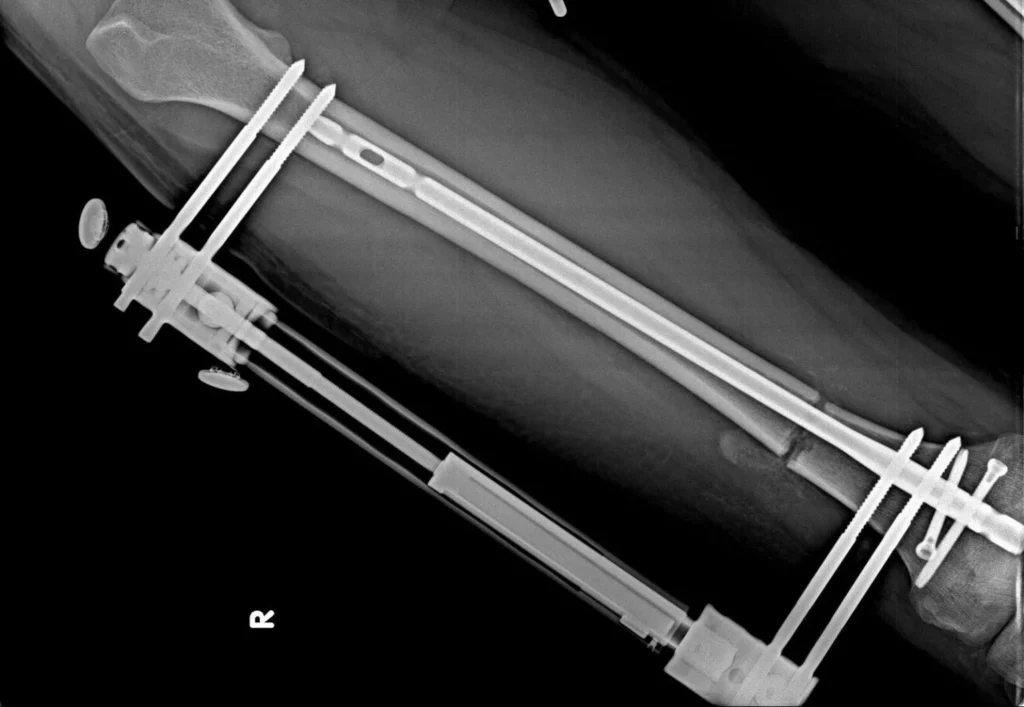
These are titanium intramedullary nails specifically designed to be compatible with the human body and are used to support the bone during limb lengthening procedures. They help maintain stability and ensure that the lengthening process progresses safely. The appropriate nail size is determined by the surgeon after evaluating the patient’s X-ray images and is typically selected from options such as 8.5 mm, 10.7 mm, 11.5 mm, or 12.5 mm.
During the operation, the nail is inserted into the inner canal of the bone. Thanks to its biocompatible properties, it does not cause harm to surrounding tissues and does not trigger adverse reactions within the body.
2 + 1 Surgeries with LON Method
First Surgery:
The procedure is performed under general anesthesia, meaning the patient remains fully asleep and does not experience pain during the operation. Before surgery, a personalized plan is created based on the patient’s physical condition and desired lengthening. During the operation, the surgeon carefully performs a controlled osteotomy on the targeted bone (either the femur or the tibia). This precise cut creates the necessary space for gradual lengthening.
To ensure proper alignment and stability, an intramedullary nail and an external fixator are applied. Around the fifth day after surgery, the lengthening phase begins. Patients gradually lengthen the bone by approximately 1 mm per day by adjusting the device. This is typically done by turning the screws every 6 hours, achieving 0.25 mm with each adjustment.
Removal Surgery for External Fixator:
Once the targeted height is achieved, the internal nail is secured with locking screws to maintain the new length. This procedure typically takes around 1 to 2 hours. After the operation, the patient is usually monitored in the hospital for one day under medical supervision.
The intramedullary nail remains inside the bone, continuing to provide support until the newly formed bone fully consolidates and becomes strong. This ensures that the gained height is stable and permanent.
Complete bone healing and consolidation usually take around 12 to 15 months after the lengthening procedure. At the end of this period, the intramedullary nail can be removed if the patient chooses to do so. The removal surgery typically lasts about 1.5 to 2 hours. After the procedure, the patient is kept under medical observation for a short time before being discharged from the hospital.
To protect the surgical area and prevent the stitches from reopening, it is generally recommended to use crutches for 2 to 3 weeks. However, some patients may prefer to keep the nail inside the bone, as it does not cause any health issues. Since the material is fully biocompatible, doctors consider it safe to remain in the body.
What Are the Advantages of the LON Method?
Quick recovery
With the LON technique, external fixators are typically removed within 2 to 3 months. This early removal accelerates the recovery process and allows patients to regain their strength more quickly.
Greater lengthening potential
Due to the structural capacity of the system, it is possible to achieve up to 9–10 cm of height increase, particularly in younger patients with suitable physical conditions.
Assisted mobility
During the treatment, patients can meet their daily needs with supported walking over short distances. Compared to methods that require long periods of immobility or wheelchair use, LON offers greater mobility and a more comfortable recovery experience.
Cost-effective solution
The LON method provides a more affordable alternative among limb lengthening techniques. Early removal of external fixators helps reduce overall costs while still delivering a high standard of treatment, making it a widely preferred option.
Safe and controlled lengthening
By combining an internal nail with an external fixator, LON ensures strong and accurate bone healing. This dual support system stabilizes the bone and minimizes the risk of improper alignment during the lengthening process, resulting in a safer procedure.
Psychological comfort
The ability to stay mobile and recover faster has a positive psychological impact on patients. Being able to walk with support helps maintain motivation and confidence throughout the extended recovery period.
What Are the Disadvantages of the LON Method?
Discomfort from external fixators
In the LON method, external fixators remain on the legs for several months after surgery, which can be uncomfortable for some patients. Sleeping positions may be limited, movement can feel restricted, and additional care is required during daily activities.
Risk of infection
There is a potential risk of infection at the points where the fixator pins pass through the skin and soft tissue. Poor hygiene or inadequate care can increase this risk. To minimize complications, a structured and closely monitored care plan is essential.
Aesthetic concerns and scarring
The use of external fixators may leave visible marks or scars on the legs. Although these usually fade over time, they can still be a concern for some patients.
Psychological impact
Adapting to life with external fixators can be mentally challenging. The presence of the device in everyday life may cause discomfort, stress, or a decrease in motivation for certain individuals.
Shower limitations
Since exposure to water may increase the risk of infection, traditional showering is generally restricted during the lengthening phase. Patients are advised to avoid wetting the surgical area and follow alternative hygiene methods.
Need for surgical expertise
The LON technique requires a high level of orthopedic experience and precision. Not all surgeons are qualified to perform this procedure, and choosing an experienced specialist is crucial to reduce the risk of complications.
FAQ
How much height can be increased with the LON method?
With the LON (Lengthening Over Nail) method, patients can typically achieve a greater lengthening range compared to fully internal systems. In most cases, it is possible to reach approximately 7–10 cm of lengthening in the femur (upper leg) and around 6–7 cm in the tibia (lower leg), depending on the patient’s physical condition and treatment plan.
One of the main advantages of the LON method is its strong mechanical support, which allows for slightly higher lengthening targets in suitable patients. However, achieving higher amounts such as 9–10 cm is not standard for everyone and requires careful planning, good bone quality, and strict adherence to physiotherapy.
It is important to understand that the maximum achievable length is not determined by the method alone. Factors such as muscle flexibility, nerve tolerance, age, and overall healing capacity play a critical role. For safety reasons, the goal is always to achieve the best possible result within safe biological limits rather than pushing for maximum length.
In some cases, if a patient desires more height increase, a second-stage surgery (for another bone segment) may be considered after full recovery. This approach allows for a greater total increase while maintaining safety.
How long does it take to recover with LON method?
Recovery with the LON (Lengthening Over Nail) method happens in several stages and depends on both the lengthening amount and the patient’s healing capacity. In general, the external fixator is removed after approximately 2–3 months, once the desired length is achieved and early bone formation is visible on X-rays.
After the removal of the external device, patients gradually reduce their reliance on support tools such as walkers or crutches over the following 4–6 weeks. During this period, mobility steadily improves, and patients begin returning to their normal daily routines. However, the exact timeline is always guided by regular X-ray evaluations and the doctor’s assessment of bone healing.
One of the most important factors affecting recovery time is the total lengthening achieved. As a general rule, greater lengthening requires a longer consolidation period. For example, each additional centimeter may extend the recovery timeline, as the newly formed bone needs sufficient time to harden and stabilize.
Although patients may regain functional independence within a few months, full bone consolidation and complete recovery typically take around 9–12 months. Consistent physiotherapy, proper nutrition, and regular medical follow-ups play a crucial role in achieving a smooth and successful recovery.
How much pain is felt after surgery?
In the LON method, pain is usually most noticeable during the first few days after surgery, which is a normal response to the operation. This initial pain is effectively managed with painkillers and medical support, and it gradually decreases as the body begins to heal.
During the first few weeks, patients may experience discomfort due to bone healing and the stretching of muscles, tendons, and surrounding tissues. This sensation is often described as pressure or tension rather than sharp pain. As the lengthening process continues at a controlled rate of approximately 1 mm per day, mild to moderate discomfort may persist.
Physiotherapy plays a key role in managing pain during this period. Regular exercises help maintain joint mobility, reduce muscle stiffness, and improve circulation, all of which contribute to a more comfortable recovery process.
In most cases, pain significantly decreases within 4–6 weeks and becomes minimal once the lengthening phase is completed and bone consolidation progresses. With proper pain management and rehabilitation, the process is generally well tolerated by patients.
What are the risks and complications of the LON method?
The LON (Lengthening Over Nail) method is a well-established and widely used technique, but like any surgical procedure, it carries certain risks and potential complications. When performed by an experienced surgeon and followed with proper care, these risks are generally low and manageable.
One of the most common concerns is the risk of infection at the pin sites where the external fixator is attached to the skin. This risk can be significantly reduced with proper hygiene, regular dressing changes, and close monitoring. If detected early, infections are usually treated effectively with antibiotics and local care.
Another possible issue is delayed bone healing or nonunion, where the bone does not consolidate as expected. In such cases, additional treatments such as bone grafting or biological support therapies may be required. Regular X-ray follow-ups help detect and manage these situations early.
During the lengthening process, muscles, nerves, and soft tissues are gradually stretched. This may lead to tension, stiffness, or nerve sensitivity. Physiotherapy is essential to maintain flexibility and prevent long-term complications. In rare cases of severe tightness, minor surgical procedures such as tendon release may be considered.
Mechanical complications, such as bending or damage to the internal nail due to excessive load or improper movement, can also occur but are uncommon. Additionally, alignment issues or slight bone deviation may develop, which can usually be corrected if identified early.
Overall, most complications can be prevented or successfully treated with careful planning, experienced surgical care, and strict adherence to post-operative guidelines.
How much does the LON method cost?
The cost of limb-lengthening surgery using the LON (Lengthening Over Nail) method typically ranges between $25,000 and $30,000, depending on the clinic, surgeon experience, and the scope of included services. This makes it one of the most cost-effective options among modern limb-lengthening techniques.
In most cases, the price includes the main surgery, a hospital stay of approximately 3–4 days, and basic post-operative care. Initial physiotherapy sessions, medications during the hospital stay, and routine follow-ups are also usually covered.
However, additional services may affect the total cost. These can include long-term accommodation, extended physiotherapy programs, private nursing care, and transportation services. For international patients, accommodation and aftercare packages are often offered separately and can vary based on the level of support and duration of stay.
Since each patient’s treatment plan is personalized, the exact cost can only be determined after a detailed medical consultation. Factors such as the amount of planned lengthening, overall health condition, and recovery needs may influence the final price.